
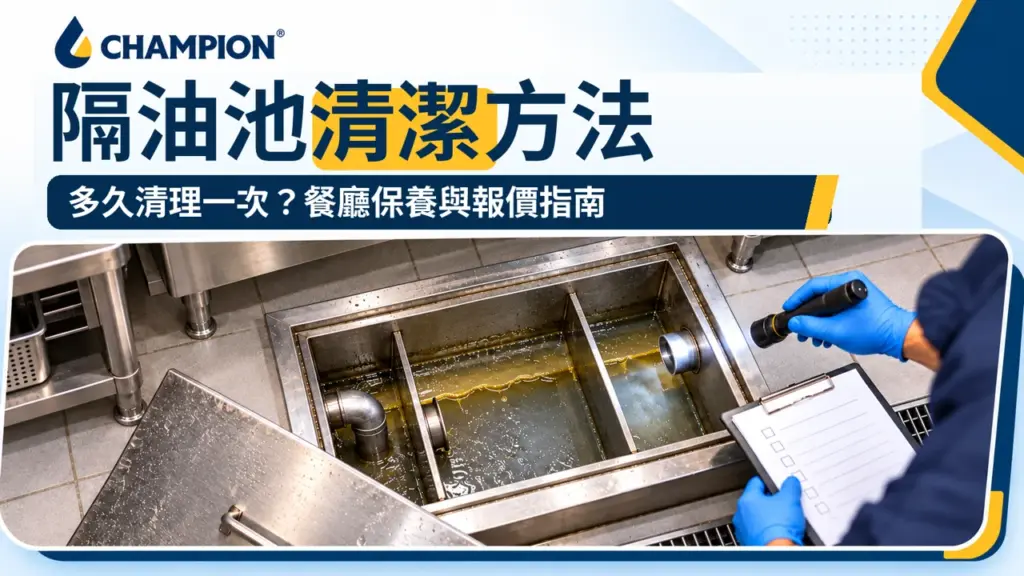
Has drainage slowed or an odour returned soon after your restaurant’s grease trap was emptied? Grease in the trap is only one possible cause. Check the connected drains, the condition of the equipment and how grease is handled in the kitchen. Once you know where the problem starts, you can plan daily checks, end-of-day cleaning, contractor visits and follow-up maintenance.
Arrange for a suitably equipped contractor to empty the trap and remove the waste. CHAMPION’s 288 PRO-DIGEST programme supports routine biological drain maintenance between clean-outs. Dosing can be adjusted to the site to help manage grease build-up and maintain drainage.
Hong Kong’s Food and Environmental Hygiene Department (FEHD) recommends checking grease traps at least daily where possible. Remove greasy waste promptly when the grease layer occupies the top 30% of the liquid depth. [1] The interval between contractor visits depends on how busy the kitchen is, the food served, the trap’s capacity and how quickly waste accumulates. A monthly visit will not suit every restaurant.
This guide covers cleaning methods, service intervals and quotations, including how 288 PRO-DIGEST fits into day-to-day grease management. Use it alongside our cleaning solutions for the catering industry to agree who handles each task in the kitchen, engineering team and contractor’s crew.
At a glance
- Schedule daily checks, end-of-day cleaning, contractor clean-outs and responses to drainage problems separately.
- Give contractors the same details about capacity, access, service hours, waste removal and scope so you can compare their quotations.
- Keep drain treatment, clean-outs and inspection records together to track grease build-up, drainage and total maintenance costs.
Contents
1. How often should you clean a grease trap?
A grease trap intercepts fats, oils and some solid waste in kitchen wastewater. Daily inspections show how quickly waste is accumulating and whether the trap is working. End-of-day cleaning removes accessible waste. Schedule more thorough clean-outs according to the condition of the trap and the site. [2][3]
Daily checks for grease build-up and drainage
Assign someone to check the trap at a set time each day and check more often during busy periods. FEHD recommends daily inspection where possible and prompt removal once the grease layer occupies the top 30% of the liquid depth. [1] If the trap overflows or drainage changes, investigate straight away instead of waiting for the next scheduled visit.
End-of-day cleaning
Hong Kong’s Centre for Food Safety advises kitchens to clean grease traps every night and dispose of the waste properly. [5] Trained staff can carry out this work on a small trap that is safely accessible from outside. Large or underground traps require a team with suitable equipment.
When to book a contractor for a full clean-out
Hong Kong’s Environmental Protection Department (EPD) notes that cleaning frequency depends on the food served and the volume of business. In addition to removing surface grease, clear deposits from the bottom of the trap when needed. [2] Use the kitchen’s inspection log to schedule visits. Review the interval if your menu, opening hours or number of meals served changes substantially.
What to do about overflows, backflow or slow drainage
Ask the engineering team or contractor to investigate overflows, backflow or persistent drainage problems. Arrange cleaning or repairs according to what they find.
Restaurant grease trap inspection and cleaning schedule
| Task | When to do it | What to do |
|---|---|---|
| Routine inspection | Ideally at least once a day, with extra checks during busy periods. | Check grease build-up, drainage and equipment condition. Record any problems. |
| End-of-day cleaning | Include nightly cleaning in the kitchen routine, taking the design and accessibility of the trap into account. | Remove waste that staff can safely reach and clean the surrounding area. |
| Contractor clean-out | Schedule according to capacity, the rate of build-up, inspection records and professional advice. | Remove surface grease and bottom deposits and complete the agreed cleaning work. |
| Fault response | Act promptly if the trap overflows, wastewater backs up or drainage remains slow. | Ask the engineering team or contractor to identify the cause and arrange cleaning or repairs. |
Adapt this schedule to the site’s operating procedures, equipment and licence conditions. A daily inspection does not require a vacuum tanker to visit every day.
2. Routine cleaning and professional clean-outs
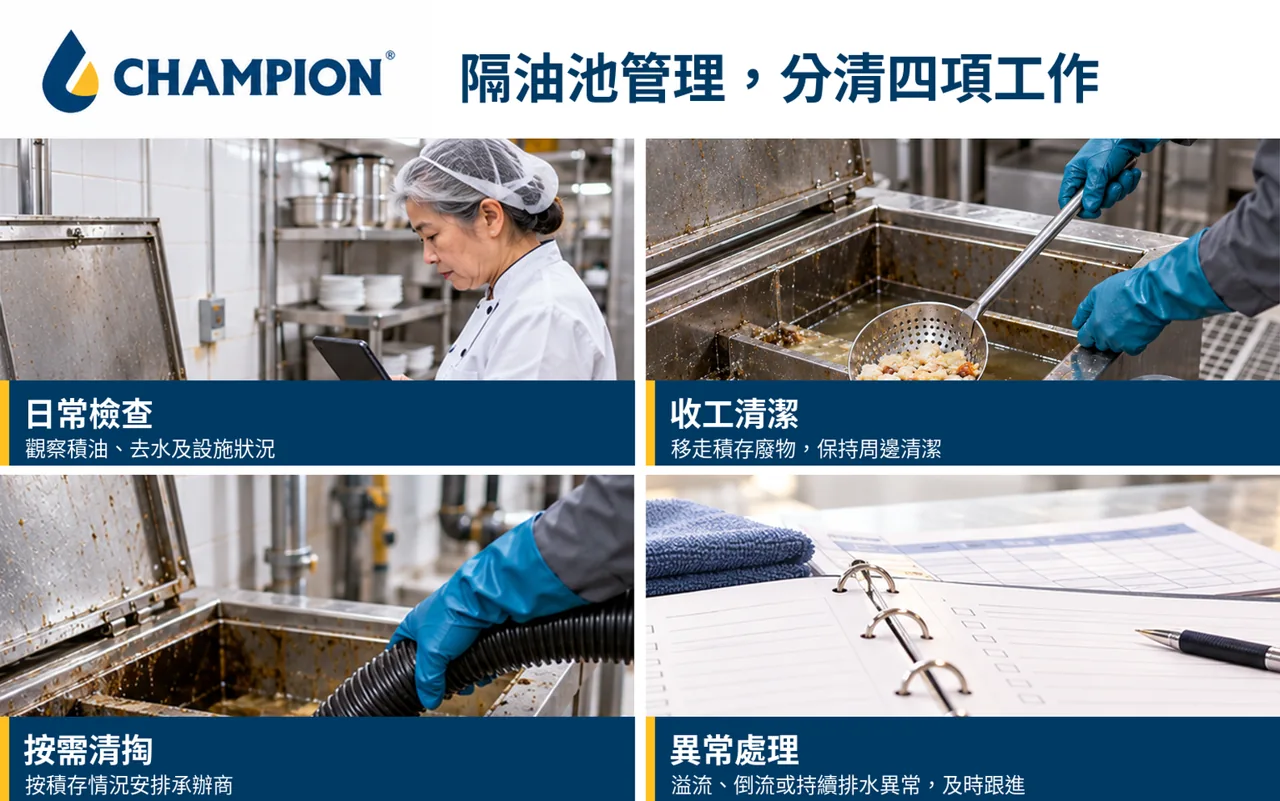
The method depends on the size, location and accessibility of the trap. Trained employees can clean small units safely accessible from outside. Use a contractor for large or underground units or where specialist equipment is needed. Routine cleaning has four steps. [2][3]
- Prepare the area. Stop the flow of wastewater, use suitable personal protection, protect food from contamination and put up signs or barriers as needed.
- Remove waste. Working from outside the trap, skim off solidified surface grease and remove bottom deposits as needed. Seal the waste in a leakproof container.
- Close and clean. Replace the cover, clean the tools and surrounding surfaces, then check the drain flow. Keep the waste out of the drains.
- Arrange disposal and record the work. Follow the site’s waste collection arrangements. Note the date, the amount of grease, who did the work and anything requiring follow-up.
These steps cover work from outside the trap. Leave underground traps, areas that cannot be reached safely and work requiring specialist equipment to a qualified team.
When should you bring forward a clean-out or engineering inspection?
Inspect early if grease builds up noticeably faster, returns soon after cleaning, slows drainage or causes backflow. Reassess the schedule when the menu changes, hours are extended or more meals are served. [2]
If drainage remains slow after cleaning, check the downstream drains for obstructions and inspect the equipment. Arrange proper removal of grease and sludge. Keep it out of sinks and drains. [2][3]
3. What to check in a grease trap quotation
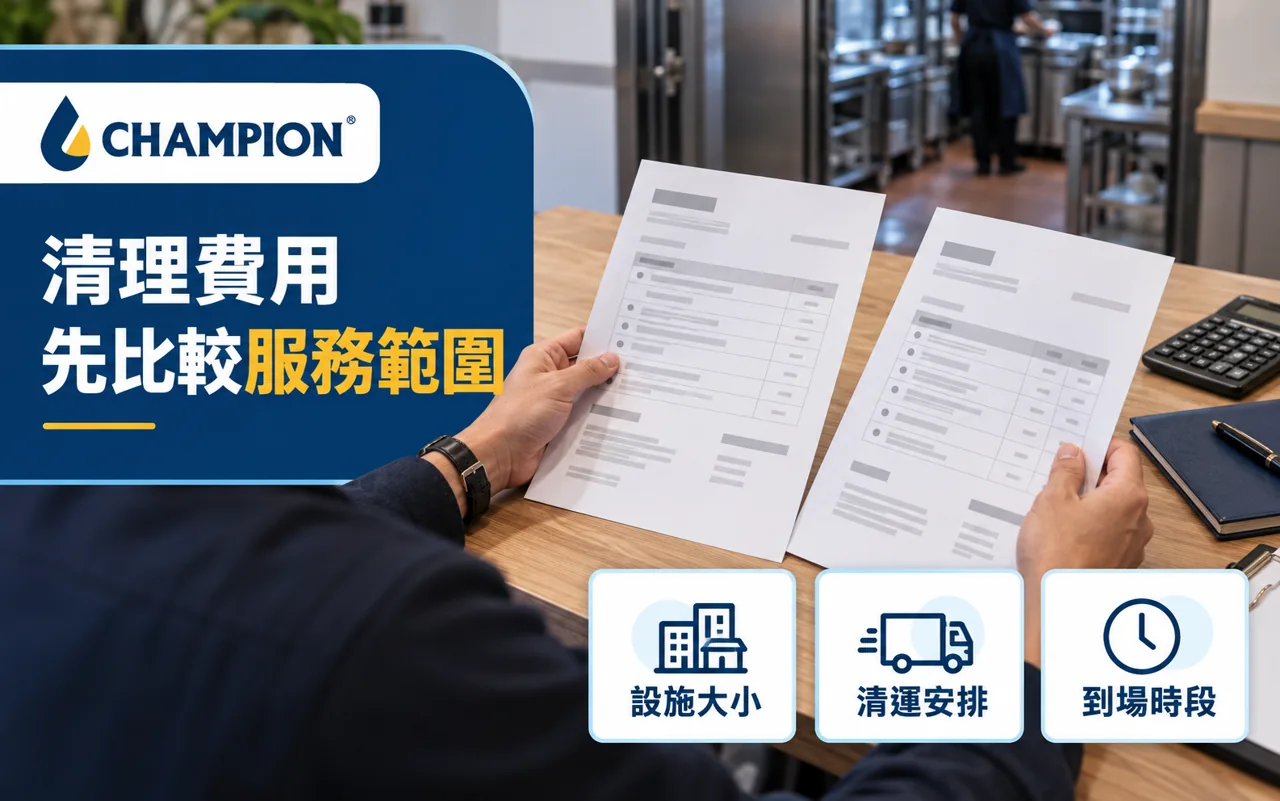
A contractor needs site details to price a clean-out and waste collection. Provide the number, capacity and locations of the traps, permitted working hours and the findings from the last visit. Ask for a separate price for each outlet and compare quotations covering the same work.
Grease trap quotations: site details and questions for the contractor
| Item | Details to provide | Questions to ask |
|---|---|---|
| Trap capacity and location | Number of traps, dimensions or capacity, and whether each is above or below ground. | Is the charge per trap, per visit or calculated another way? |
| Scope of cleaning | Date of the last clean-out and current photos of surface grease and bottom deposits. | Does the price cover bottom deposits, trap walls and connected drains? |
| Access and equipment | Parking, the equipment route, hose length required and available entrances. | Do equipment needs or access restrictions incur extra charges? |
| Service hours | Permitted working hours, expected downtime and whether the job is urgent. | How are night, holiday and emergency visits priced? |
| Waste collection and records | Disposal requirements and the service records you need. | Does the quotation include collection, disposal, photographs and proof of completion? |
Restaurant groups can use the same checklist for each outlet. Ask contractors to itemise the scope, extras and completion records by site. Arrange a site visit if an underground or complex installation cannot be assessed from photographs.
Agree the scope before comparing totals
Ask for separate prices for routine clean-outs, waste collection and additional drainage work. Confirm whether bottom deposits, completion photos and service records are included. If damage or extra work comes to light, agree the scope and price before work starts.
The contractor handles clean-outs and waste collection. CHAMPION’s 288 programme covers biological drain maintenance and dosing between visits. Agree who is responsible for each task when comparing quotations.
4. How 288 PRO-DIGEST fits into routine maintenance
Keep grease and food scraps out of kitchen drains
Scrape food scraps from dishes and equipment before washing. Keep used cooking oil separate and follow the kitchen’s collection procedure. The Centre for Food Safety advises against pouring waste oil down drains. [5] During routine checks, make sure staff can readily use the strainers and waste-oil containers and that collection arrangements work in practice.
Once grease and food scraps are intercepted in the kitchen, check the connected drains and grease traps for build-up. Routine maintenance between clean-outs helps staff spot changes in flow before an urgent visit is needed.
How the three-part biological formula helps control grease
Biological drain treatment uses enzymes and microorganisms to help break down grease. Its performance depends on wastewater conditions and a suitable dosing schedule. [4]
CHAMPION 288 PRO-DIGEST Liquid Multi-Purpose Microbial Additive combines beneficial microorganisms, nutrients and enzymes to break down grease and organic matter in drains and grease traps. Regular, measured dosing helps emulsify grease and limit the formation of hardened grease deposits that can block drains. [6][7]
Decomposing grease and organic waste can produce odours. The 288 formula helps control these odours as part of routine drain care. It is non-corrosive, contains neither strong acids nor strong alkalis, and can be used in central grease traps and under-sink traps. [7]
CHAMPION sets the dosing point, timing and quantity on an automatic dosing unit to suit the trap size, wastewater flow and operating hours. The service includes installation, commissioning, regular maintenance and reporting. [6]
Automated dosing reduces the need for staff to add the product by hand. Supervisors can check equipment and consumption records. Compare actual hours and call-outs before and after installation to see what time the site saves.
Biological dosing helps manage grease between services. Clean-outs and waste collection remove trapped waste. Refer blockages caused by foreign objects or damaged equipment to the engineering team. [3][6]
New Territories shopping centre: wastewater grease levels fell below the licence limit
A large shopping centre in the New Territories was exceeding the grease limit in its discharge licence. It introduced 288 PRO-DIGEST alongside monitoring and maintenance. Following the programme, grease concentrations in the wastewater fell below the licence limit. [6][7]
For shopping centres with central grease traps, dosing must fit tenant operations. Technicians can use trap capacity, wastewater flow and tenants’ opening hours to set the dosing point, timing and amount. Installation, commissioning and scheduled maintenance keep the automatic unit in regular use. [6]
Record grease build-up, drainage, odours, product use and clean-outs in one log. Compare periods with a similar volume of business. This gives staff a clear shift handover and helps engineering and property management teams coordinate drain treatment, clean-outs and equipment maintenance.
Enquire about 288 dosing and an on-site assessment

5. Tracking maintenance results and monthly costs
Give each trap an ID and take photos from the same position each time. Use one log for inspections, clean-outs and product dosing so the next shift can see how fast grease builds up, whether drainage has changed and what still needs attention.
Grease trap inspection and maintenance log
| Log field | What to record |
|---|---|
| Date, time and shift | Actual time of the inspection or work. |
| Location and equipment ID | Identify the kitchen unit or central grease trap. |
| Inspection findings | Grease, deposits, drainage and visible equipment condition. Attach site photos. |
| Action taken | End-of-day cleaning, a clean-out, an equipment check or a referral to engineering. |
| Staff member or contractor | Name the person who did the work and the person who checked it. |
| Follow-up and next inspection | List open issues, the person responsible and the planned follow-up date. |
Monthly maintenance costs can include the following items.
- Routine clean-outs and waste collection
- Maintenance products and equipment
- Staff time for operation and inspections
- Additional repairs and emergency call-outs
List one-off equipment and installation costs separately from recurring monthly expenses.
Compare periods with similar business volumes. Note changes in menus, operating hours and clean-out frequency. Track grease build-up, drainage faults, emergency work and hours worked alongside product and service prices. Time freed up for staff does not automatically reduce payroll costs.
Frequently asked questions
Is one grease trap clean-out a month enough?
The interval depends on what you cook, how busy the kitchen is and how quickly grease accumulates. Continue daily checks and end-of-day cleaning. Agree a clean-out schedule with the contractor using inspection records and the condition of the equipment. [1][2][5]
What details does a contractor need for a quotation?
Provide trap capacity and location, access and hose requirements, permitted working hours and site photos. Ask for an itemised price for cleaning, waste removal and additional work. Give each contractor the same scope so you can compare quotations.
Which grease trap cleaning products should a restaurant use?
Identify whether you need to clean the cover and surrounding surfaces or manage grease inside the drains. Select a surface cleaner or a biological drain treatment according to its label and the site assessment. Arrange physical removal of grease and sludge that have already accumulated.
How does 288 work alongside pumping and professional clean-outs?
Biological treatment helps manage grease between visits. Pumping and clean-outs remove the waste the trap has collected. Continue checking build-up and drainage, and keep any necessary contractor visits in the schedule. [3][6]
Which hygiene and wastewater requirements should restaurants check?
Check the food hygiene and wastewater discharge requirements that apply to your premises and the conditions of your licence. EPD advises food premises to discharge wastewater to foul sewers and keep it out of stormwater drains. Dispose of grease trap waste properly. [3][4] Keep records of inspections, cleaning and waste collection for the responsible staff and relevant authorities.
Can restaurant staff clean a grease trap themselves?
Trained staff can clean a small, safely accessible trap from outside after wastewater flow has stopped. Remove the solidified grease from the surface and seal it in a leakproof container. Replace the cover and clean the surrounding area. Remove bottom deposits when needed. [2] For large or underground traps, use a waste collector with suitable equipment and retain the cleaning and collection records. [4]
Book a restaurant drain maintenance assessment
CHAMPION provides biological drain maintenance for restaurants, hotels and sites with central grease traps across Hong Kong Island, Kowloon and the New Territories. We can plan a 288 dosing schedule and follow-up visits around the site’s needs and existing clean-outs.
When you enquire, share equipment photos, capacity, opening hours, cleaning frequency and any recent drainage problems. If some details are unavailable, tell us which issue is affecting operations most so we can discuss an on-site assessment.
Further reading
Sources
[1] Food and Environmental Hygiene Department, Food Hygiene Code, section 3.1.8, “Grease Traps”.
[2] Environmental Protection Department, Grease Trap Maintenance.
[3] Environmental Protection Department, Grease Trap Waste Disposal Control.
[4] Environmental Protection Department, FAQs for Restaurants, wastewater management and biological treatment.
[5] Centre for Food Safety, Waste Management.
[6] CHAMPION, 288 PRO-DIGEST Liquid Multi-Purpose Microbial Additive – product and service information.
[7] CHAMPION, 288 PRO-DIGEST product catalogue, product benefits and directions for use.