
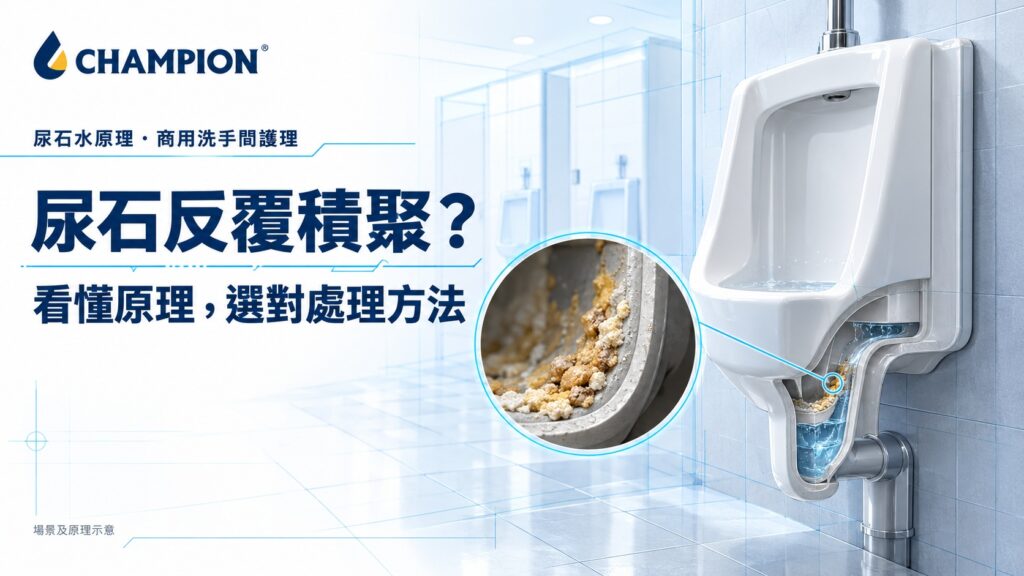
Persistent odours or slow drainage after cleaning may indicate more than surface stains: urine scale can build up in the urinal outlet, trap or pipework. These deposits typically form through interactions between urine components, microbial activity and minerals in flushing water. Effective urine-scale removal starts with identifying the location of deposits and checking drainage. Product formulation, material compatibility and on-site trial results can then guide the choice of cleaner and follow-up care.
Urine-scale cleaners vary in formulation and application. This guide explains how urine scale forms and how microorganisms, enzymes and other ingredients contribute to its treatment. A hotel case study featuring CHAMPION 820 UDR shows how product selection, on-site trials and routine care can be coordinated to address urinal odours and blockages.
For coordinated cleaning provision across a hotel or property, see the Hotel and accommodation cleaning solutions and Property Management Cleaning and Sanitation Solutions before defining the treatment scope according to the facilities.
Key Takeaways
- Urine scale is more than a stain left by dried urine;Location and composition of sediments This will affect the processing method.
- The performance of a biological urine-scale cleaner depends on its complete formulation. Understanding the roles of microorganisms, enzymes and mineral deposits helps in choosing a suitable solution.
- Product information helps in understanding the intended use and operating conditions. Combined with on-site trials and subsequent observations, it helps determine whether the product is suitable for daily use.
📖 Table of Contents
- How does urine scale form, and why does it return after cleaning?
- How do biological urine-scale cleaners work? The roles of microorganisms, enzymes and the formulation
- Choosing a urine-scale cleaner: product information and conditions of use
- Assessing a urine-scale cleaner: deposits, drainage and follow-up observations
- From an on-site trial to routine care: a hotel urinal case study
- Frequently Asked Questions
- First, identify the problem on-site, then select a solution.
1. How does urine scale form, and why does it return after cleaning?
Urine scale forms through interactions between urine components, microbial activity and mineral salt precipitation. Research indicates that microbial breakdown of urea changes the pH of urine, encouraging some mineral salts to precipitate. Minerals in flushing water may also contribute to deposits. Urine scale is therefore not simply a “uric acid stain”; deposits at different sites may also contain organic matter. [1]
This also explains why problems can persist even after cleaning the surface. Scrubbing can reach the inside of the urinal, but it may not clean the grime deep inside the drain or the pipe walls. When visible stains and deeper deposits coexist, it's difficult to assess the overall condition of the drainage system simply by looking at the cleanliness of the ceramic surface.
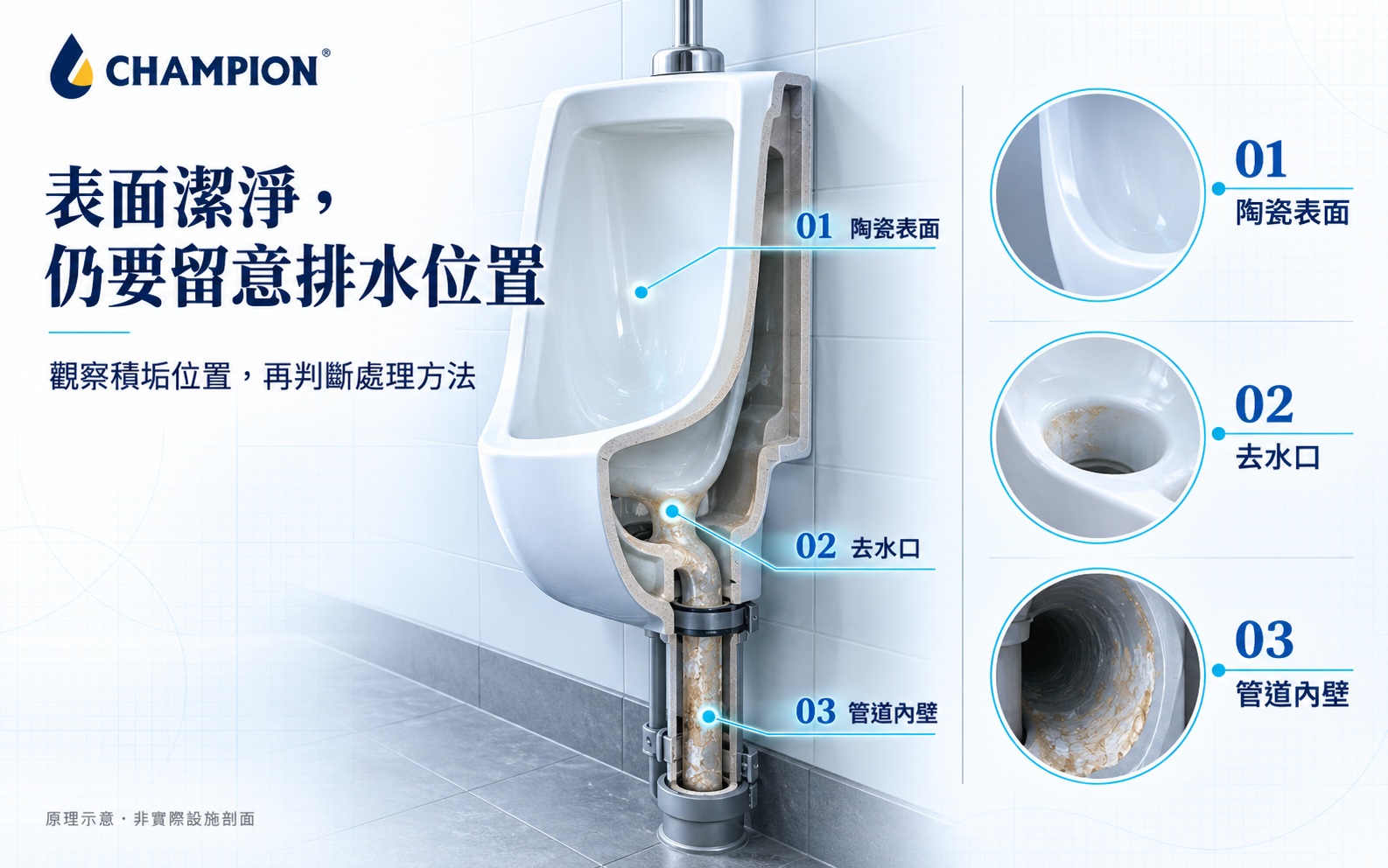
During the inspection, observations can be focused on three aspects to facilitate a joint assessment by the cleaning and engineering teams:
- Location of deposits: Is the dirt concentrated on the ceramic surface, at the drain outlet, or in a more difficult-to-reach drainage area?
- Drainage status: Does the water gradually drain away after flushing, or does it accumulate or slow down?
- Timing: Are odours or drainage problems more noticeable after cleaning, during busy periods or after a period without use?
When are surface cleaning, urine-scale removal and drainage inspections needed?
General toilet cleaners are mainly used for cleaning sanitary surfaces. Urine-scale cleaners should be selected according to the deposits present and the product’s intended use. If a urinal is clean on the surface but still drains slowly, check for deposits or other obstructions in the drainage system before choosing the appropriate treatment.
If recurring blockages, backflow, or persistent abnormalities occur, they should be inspected by engineering or plumbing personnel. Foreign objects, pipe damage, and other facility problems require appropriate cleaning or maintenance arrangements. Identifying the source of the problem first will help avoid constantly changing cleaning products when the cause is unclear.
2. How do biological urine-scale cleaners work? The roles of microorganisms, enzymes and the formulation
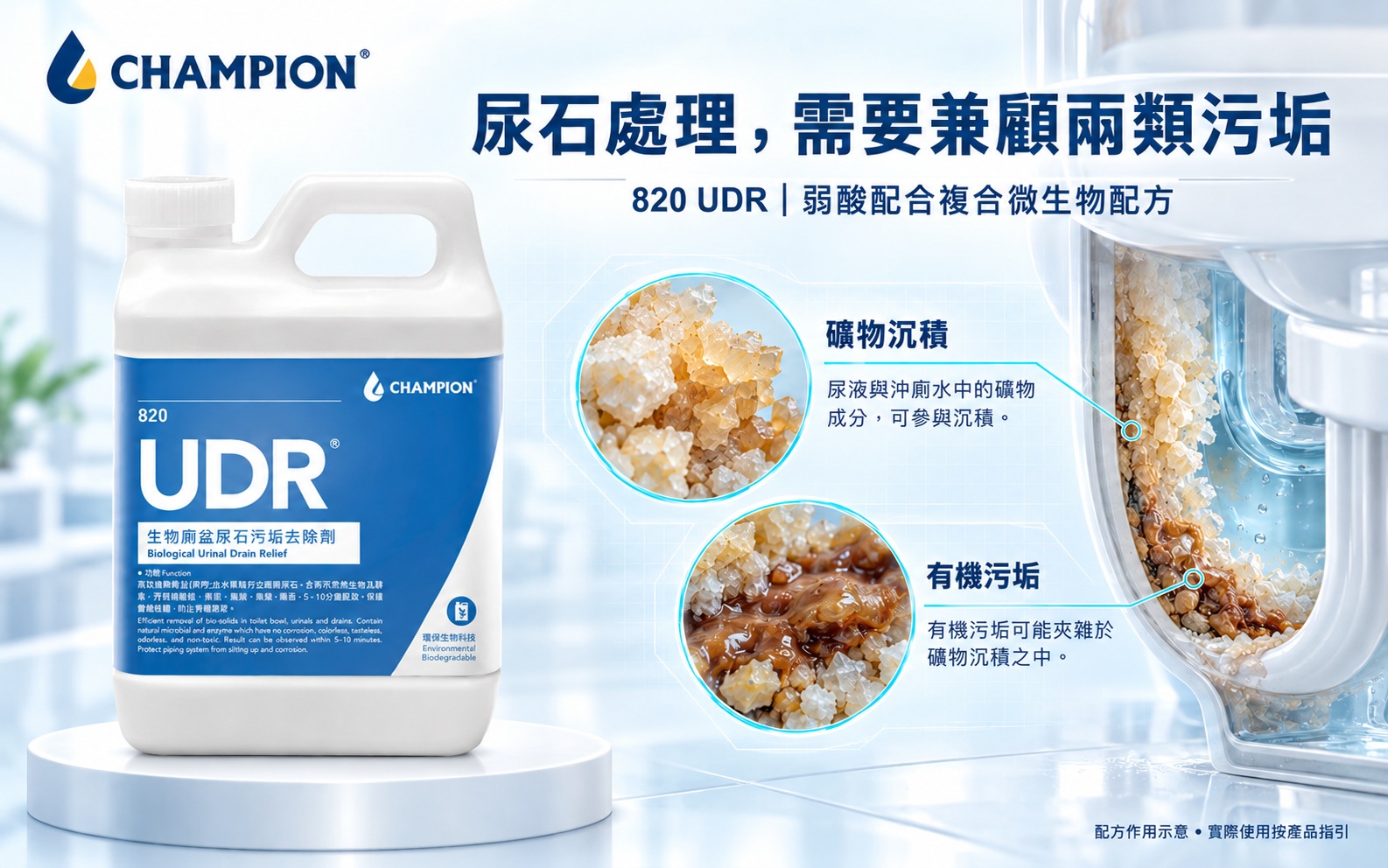
Urine scale can contain both mineral deposits and organic matter, which require different treatment mechanisms. Ingredients targeting mineral scale help dissolve or loosen deposits, while ingredients targeting organic soil help break down the organic material attached to them. This explains why the complete formulation matters more than any single ingredient.
Enzymes catalyse specific reactions. Microorganisms may help break down organic matter through their metabolism and enzyme production. These processes differ and are affected by pH, contact time and site conditions. When selecting a biological urine-scale cleaner, assess how the complete product treats the target soil and the conditions under which it was tested.
Microorganisms can contribute to urea breakdown and urine-scale formation. Certain microbial formulations can also help break down organic matter within deposits. [1] When choosing a biological urine-scale cleaner, consider how its complete formulation addresses both mineral deposits and organic soil, then confirm suitability through product information and an on-site trial.
820 UDR : addressing mineral deposits and organic matter
CHAMPION 820 UDR Biological Urinal Drain Relief is designed to treat urine-scale deposits. According to the brand’s technical guidance, its formulation combines a weak acid with a microbial blend to address mineral deposits and the organic matter within them. [2]
This formulation reflects the composition of urine scale, addressing mineral deposits alongside the organic matter mixed within them. Hotel and property management teams can assess three practical outcomes: reduced buildup, improved drainage and performance during subsequent use. These observations are more useful than colour changes or foaming when deciding whether the product meets the site’s needs.
Before selecting a product, have the technical team understand the materials of the toilet fixtures and pipes, the existing buildup, and the cleaning products you usually use, and then confirm the applicable methods. "Bio-based formula" does not mean completely acid-free; the applicable conditions for ceramic, metal fittings, plastic parts, and pipes should still be based on the latest product labels and technical guidelines.
3. Choosing a urine-scale cleaner: product information and conditions of use
When choosing a urine-scale cleaner, in addition to understanding its cleaning effect, it's also important to consider existing facilities, operating methods, and daily care arrangements. Product catalogs, safety data sheets, and test reports each have their uses; understanding them in conjunction with on-site trials can help the purchasing, engineering, and cleaning teams determine whether the product is suitable for use.
| References | Content that can be learned | How to meet the needs of the site |
|---|---|---|
| Product Catalog / User Guide | Product uses, applicable locations, and recommended operating methods. | By comparing toilet fixtures, accumulated grime, and work processes, a suitable solution is initially selected. |
| Safety Data Sheet (SDS) | Safety information regarding the use of protective equipment, storage, first aid, and incompatible materials. | Arrange operations and training; the cleaning effectiveness will be determined by testing and trial results. |
| Test Report | Test samples, dosage, contact time, materials, and measurement results. | Understand the relationship between the test and the field conditions, and confirm the scope of application of the results. |
| On-site trial and maintenance records | Scale buildup, drainage, odor, and operational status at designated locations. | Observe its performance under daily use as a reference for subsequent care and expanded use. |
Must-ask list before purchasing
- Is the buildup mainly on ceramic surfaces, drain outlets, pipes, or water traps?
- Are commonly used toilet cleaners acidic, alkaline, or chlorine-containing products?
- Is the product suitable for the toilet fixtures, metal fittings, plastic parts, and pipe materials used on site?
- What contact time does the product require? Does the application involve soaking, pouring into the drain or brushing?
- Are there any relevant test reports? Are the test conditions similar to the actual on-site conditions?
- What indicators will be used to judge the effectiveness after a trial: dirt buildup, drainage, odor, number of complaints, or cleaning time?
4. Assessing a urine-scale cleaner: deposits, drainage and follow-up observations
When reviewing test data, first determine whether actual urine scale, artificially prepared deposits, or other types of dirt are being used, then examine the product dosage, contact time, and test materials. These factors help interpret the results and allow the technical team to determine if further on-site trials are necessary. Antibacterial testing and urine scale removal testing have different purposes and should be understood according to their respective test items.
Scale buildup, drainage issues, and odors can be observed separately.
Regarding scale buildup, pay attention to the extent, thickness, and residue of deposits in fixed locations. For drainage, observe whether flushing is smooth and whether water remains. Odors can be another area to observe, but if the odor originates from other locations, further investigation is necessary. Recording these changes separately helps to clearly understand where improvements are concentrated.
Taking before and after photos from the same position and angle, and noting the date and the work performed, will make comparison easier. If there was scrubbing, drain cleaning, or parts replacement during the same period, record that as well, so that the engineering and cleaning team can have a complete picture during follow-up inspections.
After treatment, observe performance as normal use resumes. Under comparable usage and cleaning schedules, check whether drainage remains clear, deposits return to the same locations, and frontline staff still need repeated follow-up. These observations can guide changes to the care schedule or indicate a need for further inspection.
5. From an on-site trial to routine care: a hotel urinal case study
When arranging a trial, a small number of representative urinals or drainage locations can be selected first, and the cleaning and engineering teams can jointly confirm the original situation. By recording the location of sedimentation, drainage performance, the time when odours occur, and the cleaning products being used, the technical team can more easily propose appropriate operation and follow-up arrangements.
During the trial period, operate according to the product instructions and keep records of dosage, contact time, and procedures. After completion, conduct a follow-up inspection at the agreed time. For hotels or properties requiring shift management, designated personnel can organize records so that the next shift colleagues clearly know which areas have been treated, what needs to be observed, and when to contact the technical team for follow-up.
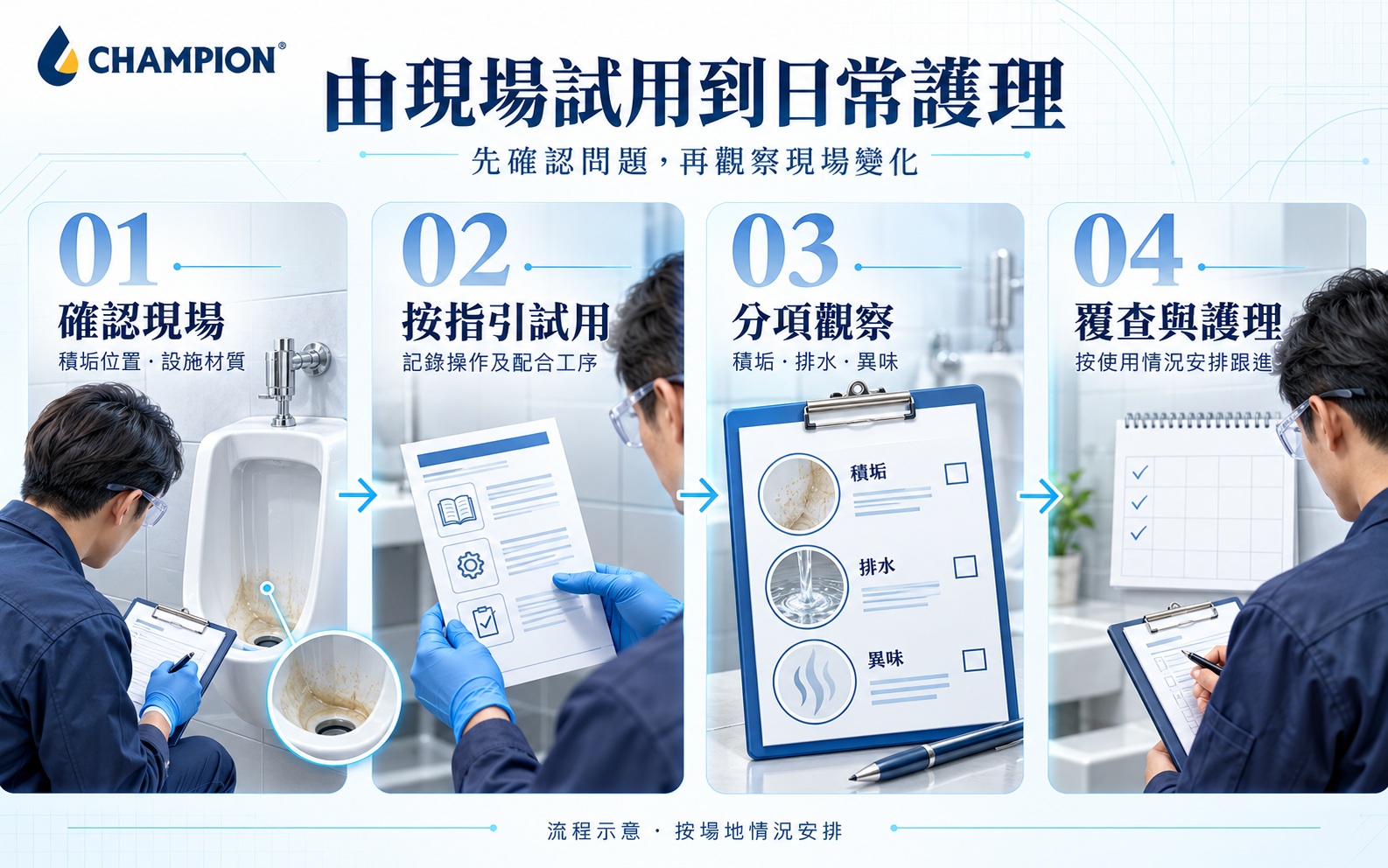
Case study: resolving urinal blockages and odours at a five-star hotel
The men’s changing-room washroom at a five-star hotel had persistent urinal blockages and strong odours. Although regular cleaning and urine-scale treatment were already in place, deposits continued to affect normal use. Management needed a solution suited to the site and wanted the engineering team to see the application process and results directly.
CHAMPION responded to the scale and soil buildup by arranging samples of 820 UDR for an on-site trial with the hotel’s engineering team. Photographs documented the application and changes at the site, allowing the team to compare conditions before and after treatment and understand how the product could be used with the existing facilities.
During this on-site trial, 820 UDR broke down the urine-scale deposits within 5–10 minutes, helping restore drainage and improve odours and washroom hygiene. The application was straightforward and did not require a prolonged shutdown, reducing disruption to normal use. Engineers observed the changes in drainage and buildup directly, providing a practical basis for product selection. The customer also reported that CHAMPION provided professional after-sales support that increased the team’s confidence in using the product. The hotel subsequently purchased 820 UDR and established an ongoing working relationship. These results relate to this particular on-site trial. Treatment times and arrangements at other sites must be assessed according to the extent of buildup, materials and operating conditions.
Incorporate trial results into daily care
The above approach can also be used as a reference for other sites: first address confirmed scale buildup issues, then arrange follow-up care based on the results of follow-up inspections. The cleaning team is responsible for daily operations and observation, the engineering team follows up on drainage abnormalities or facility problems, and the technical team assists in confirming product usage conditions. Clear division of labor makes it easier to follow up promptly when problems recur.
Frequently Asked Questions
How does a urine-scale cleaner differ from a general toilet cleaner?
General toilet cleaners are mainly intended for cleaning and removing soil from sanitary surfaces. Urine-scale cleaners target deposits according to their formulation and intended use. First identify the location and type of soil, then check suitability for the fittings and drainage system. The two product types should not be treated as interchangeable based on their names alone.
Are biological urine-scale cleaners always acid-free?
"Bio-based" usually refers to the product's formulation characteristics, not a complete ingredient declaration. Some products combine microorganisms and other cleaning agents to address the specific needs of different types of dirt. For information on whether a product contains acids, applicable materials, and usage restrictions, please consult the latest product data and confirm with the supplier.
What is the difference between a safety data sheet and an effectiveness test?
Safety Data Sheets (SDS) primarily describe the safe use, storage, and emergency information for chemicals; efficacy tests describe cleaning performance under specified conditions. Reading both together allows you to understand operational requirements and product applications, and then confirm suitability through on-site trials.
Can a urine-scale cleaner replace drain clearing or repairs?
A urine-scale cleaner can treat deposits within its approved uses. Blockages caused by foreign objects, damaged pipes or other facility problems still require professional clearing or repair. Arrange an inspection if backflow recurs or drainage remains abnormal.
How often should urinals be checked after urine-scale treatment?
Follow-up checks can be scheduled based on usage volume, degree of buildup, and the technical team's recommendations. After the initial treatment, checking drainage and residual buildup, and then observing changes after resuming normal use, will provide a more comprehensive assessment than simply checking immediately after treatment. The frequency of maintenance needs to be adjusted accordingly depending on the usage and facility conditions in different locations.
First, identify the problem on-site, then select a solution.
If the urinal repeatedly accumulates dirt or drains slowly, first organize photos of the scene, the location of the problem, and the daily cleaning schedule. CHAMPION can help identify suitable products and the scope of assessment based on the information provided, so that trials and ongoing care are suited to the site.
Property management, hotel and cleaning contractor teams across Hong Kong Island, Kowloon and the New Territories can contact CHAMPION for a free 15-minute consultation, or use WhatsApp Instant Messaging to share site details and discuss urine-scale treatment, product selection and trial arrangements.
Further Reading
Safety Tips
Before use, read the latest product label and SDS, and follow the instructions for ventilation and personal protection. Do not mix different cleaning products, especially do not mix chlorine bleach with acidic cleaners; if you are unsure about material compatibility, consult the supplier first. [3]
Source of information
[1] Eawag: Research on Urine Diversion and Treatment ; Udert et al.'s research on sedimentation in urine collection systems .
[2] CHAMPION : 820 UDR Biological Urinal Drain Relief product page ; Technical guidance on urine-scale care .
[3] Hong Kong Labour Department: Guidelines for the Safe Use of Chemicals by Cleaning Workers .