
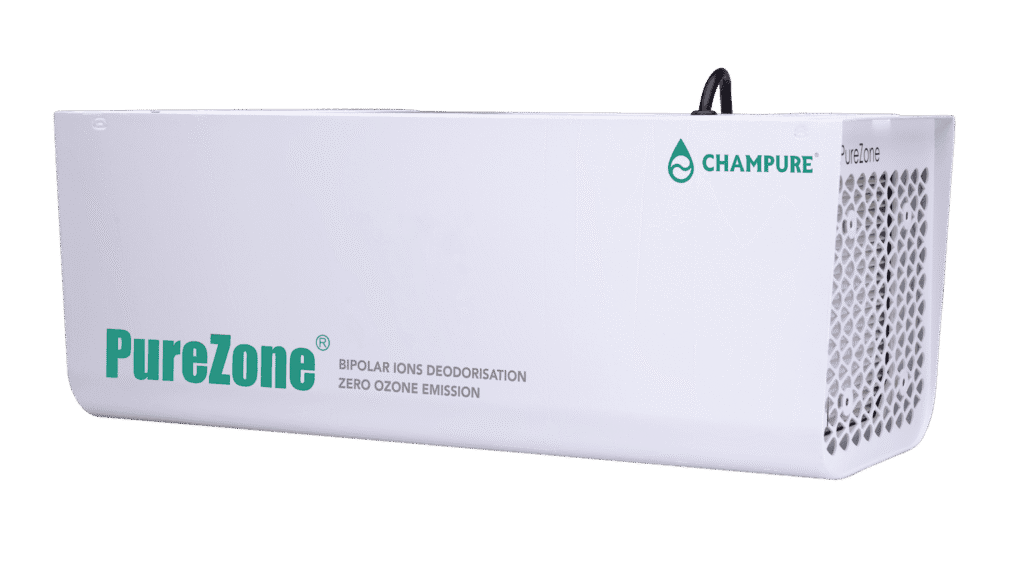
In the post-pandemic era, public expectations for indoor air quality (IAQ) have risen to unprecedented levels. For operators of property management, hospitality, and healthcare facilities, providing a clean, odorless, and safe breathing environment is no longer a bonus, but rather a fundamental requirement for maintaining customer trust and protecting employee health.
A variety of products have emerged in the marketAir disinfection technologyAmong them, Biozone Brands as representatives Photoplasma Technology and emergingBipolar ions (Bipolar IonizationThis technology has become a key factor for many companies when choosing commercial air purifiers.The key consideration at that time.
However, these two technologies differ fundamentally in their principles, effectiveness, and application scenarios. As a leader in commercial hygiene solutions, we are committed to providing in-depth analysis to help you make the most informed decision. This article will discuss these two mainstream technologies...Deodorization technologyConduct a comprehensive technical comparison.
Technical Analysis 1: Photoplasma(Photoplasma) technology
Photoplasma technology is often used in applications including Biozone Among air purification devices, the core principle can be understood as a controlled, enhanced version of the natural purification process.
- Working principle:
- Air is drawn into the equipment.
- High-intensity ultraviolet radiation inside the equipment (UVGIThe lamp irradiates a special catalyst coating (usually titanium dioxide TiO₂).
- This process produces a highly active purifying substance called "photoplasma," which is mainly composed of hydroxyl radicals (•OH), hydrogen peroxide (H₂O₂), etc.
- These active substances are released into the air, actively decomposing volatile organic compounds (VOCs), viruses, bacteria, and other harmful substances in the air.Unpleasant odors in the airmolecular.
- advantage:
-
- Highly efficient decomposition capabilityIt has an excellent decomposition effect on chemical gases (such as formaldehyde and ammonia) and stubborn odors.
- Active purificationIt can release purifying agents into the air, and its effect extends beyond the device itself.
- Points to consider:
- Potential byproductsUVGI lamps, especially those emitting ultraviolet light in specific wavelengths, pose a risk of producing ozone (O₃) when they react with oxygen in the air. While manufacturers strive to keep ozone levels within safety standards, it remains a significant health concern in places with sensitive populations (such as asthma sufferers and children), such as hospitals and hotel rooms.
- Consumables and MaintenanceUV lamps and catalyst coatings degrade over time and need to be replaced regularly to maintain optimal performance, which leads to ongoing maintenance costs and manpower investment.
- Conditions of actionIts purification efficiency is related to the residence time of air in the equipment, humidity, and temperature.
Technical Analysis 2: Bipolar Ionization)technology
Bipolar ionsTechnology is a more cutting-edge approach.Air disinfection technologyIt is inspired by the self-purification principle of forest air after rain. It does not rely on ultraviolet light or chemical catalysts, but acts directly on the air itself.
- Working principle:
- The device decomposes water molecules (H₂O) in the air into a large number of positive ions (H+) and negative ions (O₂-) by applying a specific voltage.
- These charged ions are released throughout the space, actively seeking out and surrounding pollutants in the air.
- For particulate matter (PM2.5).Ions charge the particles, causing them to coalesce into larger particles through the principle of attraction between positive and negative charges, accelerating sedimentation and making them easier for traditional filtration systems to capture or for them to fall to the ground naturally.
- For viruses and bacteriaIons adsorb onto the surface of pathogens, damaging their protein structure (spike proteins) and rendering them inactive and infective.
- For odors and VOCsThe ions react chemically with these gas molecules, breaking them down into harmless carbon dioxide and water.
- advantage:
-
- Safe and free of byproductsHigh-quality bipolar ion systems, under proper engineering designIt will not produce ozoneIt produces no other harmful byproducts, but is absolutely safe for the human body and can operate continuously 24/7 in a human-occupied environment.
- Proactive and comprehensiveIons not only purify the air, but also settle on the surface of objects (such as door handles and tabletops), providing a certain degree of continuous disinfection for the object surface, thus achieving dual protection of "air + surface".
- Low maintenance costsIt requires no consumables such as UV lamps, and usually only requires periodic cleaning of the ion emission needle, making maintenance extremely simple and resulting in lower long-term operating costs.
- Easy to integrateIt can be used as an independentCommercial air purifierIt can also be seamlessly integrated into existing central air conditioning (HVAC) systems to achieve air purification throughout the building at extremely low cost.
Key Comparison: Photoplasm vs. Bipolar ions
To help you understand the differences more intuitively, we have created the following comparison table:
| Feature Comparison | Photoplasma technology (Biozone (For example) | Bipolar ion technology |
| Core Principles | UV photocatalysis generates hydroxyl radicals, etc. | Ionize air to produce positive and negative ions |
| mode of action | The reaction mainly occurs within the equipment, releasing active substances. | Actively releases ions, which then act throughout the space. |
| For particulate matter (PM2.5) | Its effects are limited and it is not its primary function. | Significant effectAccelerating sedimentation through coagulation |
| Odors/VOCscontrol | Significant effect | Significant effect |
| against the virus/bacteria | Effective, it destroys through oxidation. | Significant effectInactivation is achieved by disrupting the protein structure. |
| Safety and Byproducts | The potential risk of ozone generation needs to be considered. | Extremely high securityCertified products do not produce ozone. |
| Consumables and Maintenance | Replace UV lamps and catalysts regularly. | Nearly zero consumablesOnly requires regular cleaning |
| Coverage | Air purification | air + Surface cleaning |
| Application | Suitable for garbage rooms, etc.Air deodorizerHigh-requirement unmanned environment | Suitable for all locations, especially high-traffic indoor environments such as hotels, office buildings, and hospitals. |
Application Recommendations: Choose the Right Tools for Your Business
- For hotel and high-end property management:
Your challenges are varied: managing the fragrance in the lobby, lingering smoke in guest rooms, and the smell of sweat in the gym.Bipolar ionsThe technology's comprehensiveness (odor removal + sterilization + dust removal) and high safety provide your guests with a perceptible fresh and healthy environment, while its ability to purify object surfaces also reduces the risk of cross-infection. - For hospitals and clinics:
Infection control is the highest priority.Bipolar ionsThe technology has been proven by multiple laboratories to effectively inactivate various pathogens, including the novel coronavirus, and poses no ozone risk, making it extremely friendly to patients and healthcare workers. It can be seamlessly integrated into central air conditioning systems, becoming an invisible barrier against the epidemic. - Control of extreme odors in garbage rooms, etc.:
In these areas,Odor controlThis is the primary goal. Photoplasma™ technology, due to its powerful VOCs decomposition capabilities, is an effective option. However, the next generation...Bipolar ionsThe system can also efficiently treat malodorous gases such as ammonia and hydrogen sulfide, and it has no maintenance hassles or safety concerns, making it a more popular choice for modern properties.
A shift in mindset from "passive response" to "active defense"
Photoplasma technology (such as...) Biozone (used) in specificAir deodorizationIts value has been proven in practice. However, it is more of a "reactive" solution that requires regular maintenance and ongoing attention to its byproducts.
In comparison,Bipolar ionsThe technology represents a more modern and comprehensive concept of "active defense." It not only solves problems in the air but also extends the defense to the surface of objects. At the same time, its material-free and highly secure characteristics perfectly match the modern commercial facilities' pursuit of efficient, low-cost, and sustainable operation.
Which one to choose?Air disinfection technologyIt's not just about choosing a machine, but about choosing a long-term philosophy for air quality management.
Are you struggling to choose the right commercial air purification solution?
Contact our team of experts to obtain a free air quality assessment report tailored to your venue. We will provide a customized approach based on your specific needs, space layout, and budget.Bipolar ionsCustomized solutions using cutting-edge technologies help you achieve your goals in one step and enhance the competitiveness of your facilities.
Click here to learn more about PureZone.Bipolar Ion Air Purifier
