
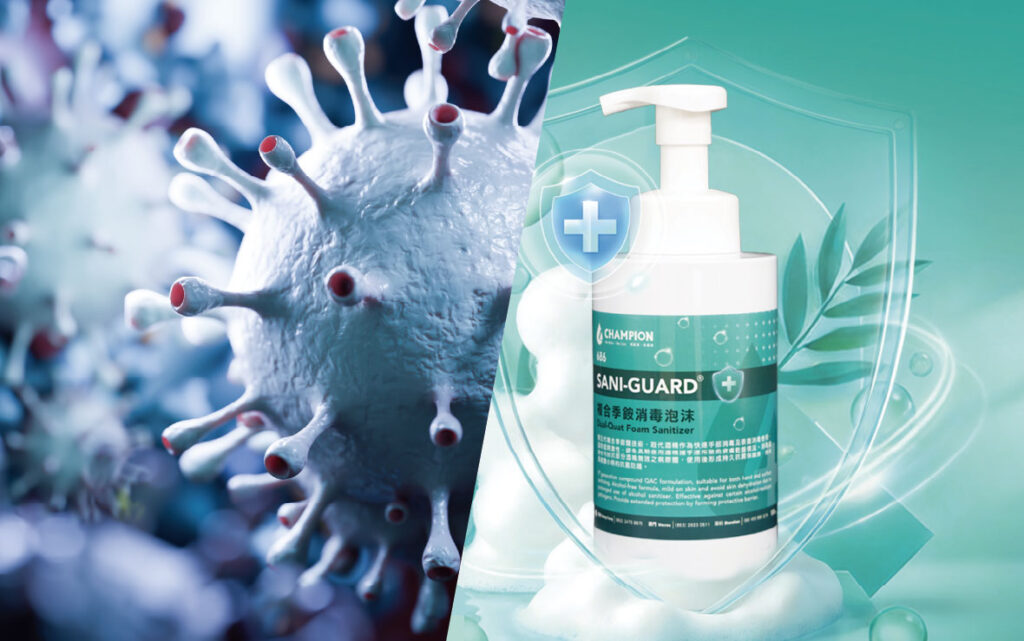
In early 2026, Hong Kong recorded 45 food poisoning cases, 39 of which were linked to norovirus, affecting a total of 113 people. Epidemiological investigations showed that the affected individuals had all consumed oysters during the incubation period. At the same time, acute gastroenteritis activity in Hong Kong increased, and a high number of norovirus-related outbreaks were recorded in care homes and schools. For schools, care homes, hotels, restaurants, and other high-traffic venues, the issue this time is not just “being careful with oysters,” but whether routine disinfection protocols need to be upgraded when norovirus is a virus that alcohol does not effectively kill.
What Is Norovirus? Why Is It So Difficult to Control?
Norovirus is troublesome not only because it causes vomiting and diarrhea, but also because it possesses several high-risk characteristics: it is highly contagious, can persist on contaminated surfaces for days to weeks, is not effectively killed by alcohol, and spreads through multiple routes.
- Highly contagiousIt is estimated that as few as 18 virus particles can cause illness.
- Persists on surfaces:Once a high-touch surface becomes contaminated, the risk can remain for days to weeks.
- Alcohol does not effectively kill norovirusAlcohol-based hand sanitizers cannot replace soap and water for washing hands.
- Multiple transmission routesIt can be transmitted through contaminated food or water, vomit or feces of patients, contaminated objects, and droplets produced during vomiting.
- Rapid onset and rapid spreadThe incubation period is generally 12–48 hours. Most patients gradually recover within 1–3 days, but young children, the elderly, and people with weakened immune systems are more prone to dehydration.
Because norovirus presents a high transmission risk in settings where alcohol alone is not sufficient, traditional alcohol-based disinfectants are insufficient for high-contact settings such as schools, care homes, hotels, and restaurants. This is exactly the gap that 686 SANI-GUARD® is designed to address.
Why are oysters so risky?
The recent cases of food poisoning in Hong Kong linked to norovirus have all been clearly related to oysters. The Centre for Health Protection pointed out that the affected individuals had all consumed oysters during the incubation period; raw or undercooked oysters are considered high-risk foods, and alcoholic beverages, lemon juice, or mustard cannot kill the norovirus. For restaurants, hotels, and any establishments handling seafood, this is not just a matter of ingredients, but also a significant reminder of the risks associated with overall hygiene procedures and disinfection protocols.
Is Alcohol-Based Hand Sanitiser Enough?
The answer is no. When it comes to norovirus, the key issue is that alcohol does not effectively kill the virus. That means if a venue still relies mainly on alcohol as its primary line of defence for hands and high-touch surfaces, it is easy to leave a protection gap.
During periods of heightened norovirus activity, what high-traffic venues need is not simply “more alcohol,” but an upgraded solution designed for alcohol-resistant viral risks. According to Champion’s product information,686 SANI-GUARD® Dual-Quat Foam Sanitizeruses 5th Generation QAC technology and is designed for high-frequency use environments, making it suitable for daily protection in high-contact settings.
686 SANI-GUARD®: A long-lasting upgrade solution for norovirus.
When facing risks like norovirus that alcohol cannot effectively kill, disinfection solutions need to be upgraded from alcohol to 686. Champion Group has launched a new type of disinfectant.686 SANI-GUARD® Dual-Quat Foam SanitizerIt provides targeted cleaning solutions that surpass traditional disinfectants in many ways, making it an ideal choice for medical institutions, schools, hotels, restaurants, and other high-traffic venues.
- Highly effective at eliminating norovirus: Experiments have shown a kill rate of 99.991 TP3T, far exceeding many commercially available products and reaching an industry-leading level.
- Long-lasting protection mechanism: Forms a long-lasting protective layer on hands and surfaces, making it suitable for door handles, dining tables, handrails, and other high-touch areas.
- Alcohol-free, non-flammable, and gentle: Improves storage and usage safety while remaining suitable for children, older adults, and people who need frequent disinfection.
- Broad-spectrum antimicrobial protection: In addition to norovirus, it is positioned for broader protection against multiple viruses, bacteria, and fungi.
- Dual use for hands and surfaces: suitable for both hand disinfection and high-touch surface management, helping simplify procurement and hygiene management.
686 SANI-GUARD® Dual-Quat Foam Sanitizer
In other words, 686 SANI-GUARD® is not just an option to "add another product," but rather an extra layer of protection when you know that the alcohol may not be enough.
How should vomit be handled? This step is crucial and should not be taken lightly.
One of the high-risk aspects of norovirus transmission is the handling of vomit and feces. The Centre for Health Protection recommends: first, isolate the scene, wear gloves and a surgical mask, and use disposable cloths to clean the vomit. Then, clean the contaminated surface and surrounding area with household bleach diluted 1:49, let it sit for 15 to 30 minutes, and then wash it. Do not use a mop to clean up vomit.
However, it's important to distinguish between the two: bleach is for on-site emergency treatment; but in everyday hand hygiene, high-touch surface care, and shared facility management outside of accidents, relying solely on alcohol will be insufficient to address norovirus risks. This is precisely why 686 SANI-GUARD® is so crucial for daily protection.
Which Settings Need 686 SANI-GUARD® the Most?
The venues that most need to upgrade to 686 SANI-GUARD® are not limited to one sector For example:
- School/Kindergarten: Classroom desks, door handles, toys, restrooms, and canteens are all high-touch areas.
- Care homes and healthcare-related settings: Bed rails, wheelchair handrails, shared dining room, and restrooms.
- Restaurants and food processing facilities: Dining tables, countertops, door handles, high-touch surfaces in the kitchen, and work areas where ready-to-eat foods are frequently handled.
- Hotels and hospitality settings: Guest rooms, public restrooms, reception areas, elevator buttons, and dining areas are all high-frequency contact locations.
These venues face not just a cleaning issue, but the risk that "an outbreak would impact their operations, reputation, and the health of vulnerable users." Therefore, the real question this time is not whether to spray more alcohol, but whether existing solutions are sufficient to deal with norovirus.
Further Reading Campus Epidemic Prevention GuidelinesUnderstand the overall epidemic prevention arrangements for classrooms, canteens, restrooms, and high-risk areas.
Take Action Now and Upgrade Your Protection
In the face of norovirus, the most important thing to upgrade is not panic, but disinfection measures. When alcohol fails to effectively kill norovirus, high-traffic venues should no longer rely solely on old practices. If you are reviewing on-site hygiene arrangements for schools, restaurants, care homes, hotels, or other high-contact venues, you can contact us directly.686 SANI-GUARD® Dual-Quat Foam SanitizerOr contact us to learn about upgrade solutions that are more suitable for your needs!
Get exclusive quotes and trial plans
Frequently Asked Questions
Q1. Is norovirus necessarily related to oysters?
Not necessarily, but epidemiological investigations of this wave of norovirus-related food poisoning cases in Hong Kong show that the affected individuals had all eaten oysters during the incubation period, so oysters are clearly a high-risk food in this outbreak.
Q2. Why is alcohol-based hand sanitizer insufficient to combat norovirus?
Because the Centre for Health Protection clearly stated thatAlcohol failed to effectively kill norovirus.Therefore, alcohol-based hand sanitizers cannot replace soap and water for handwashing. For high-traffic venues, if alcohol remains the primary disinfection method, there is a potential vulnerability in the face of norovirus risks.
Q3. Why is it necessary to upgrade to the 686 SANI-GUARD® at this time?
Because of the presence of norovirus, etc.The alcohol was not effectively treated.Given the risks, the disinfection solution itself needs to be upgraded. According to Champion product information, the 686 SANI-GUARD® uses fifth-generation Quaternary Ammonium Complex (QAC) technology, which is designed to effectively combat a variety of pathogens, including norovirus, and provides long-lasting protection. It is suitable for hand and high-touch surface management in high-frequency use environments.
Q4.What makes 686 SANI-GUARD® more suitable than regular alcohol-based products in this situation?
The key point is that it addresses the risk that alcohol may not be sufficient to cope with the problem. Champion Product 686 is an alcohol-free, non-flammable, mild and non-irritating formula with broad-spectrum antimicrobial protection. It can be used for both hand and surface management and is well-suited for high-contact, high-frequency use scenarios.
Q5. If there is vomit at the scene, is it okay to use only 686 to handle it?
It is not recommended. In cases involving vomit or fecal contamination, it is still essential to follow the official incident handling procedures, including isolating the scene, wearing gloves and masks, cleaning the contaminant with disposable cloths, and then... Dilute household bleach 1:49 Treat the contaminated location. (686 Key System)Daily hand contact surface protection upgradeIt does not replace the accident scene handling procedure.
Q6. 686 SANI-GUARD® replace handwashing?
No. Even with upgraded disinfection measures, hands should still be washed with soap and water before handling food, before eating, after using the toilet, and after contact with contaminated surfaces. The role of 686 is to enhance daily protection, especially addressing the risk of viruses that alcohol cannot effectively handle, not to replace proper handwashing habits.
Q7. Which venues should prioritise 686 SANI-GUARD®?
OrdinaryHigh contact, high flow, and cannot tolerate the risk of outbreak.These venues should be prioritized for upgrades, such as schools, kindergartens, care homes, restaurants, hotels, healthcare spaces, and any environment requiring frequent contact with shared surfaces. This is because if norovirus cases occur in these settings, the impact usually extends beyond cleaning; it can also affect operations, reputation, and user health.